Destination Guide · Chongqing
Chongqing travel guide: the mountain megacity, explained for first-timers
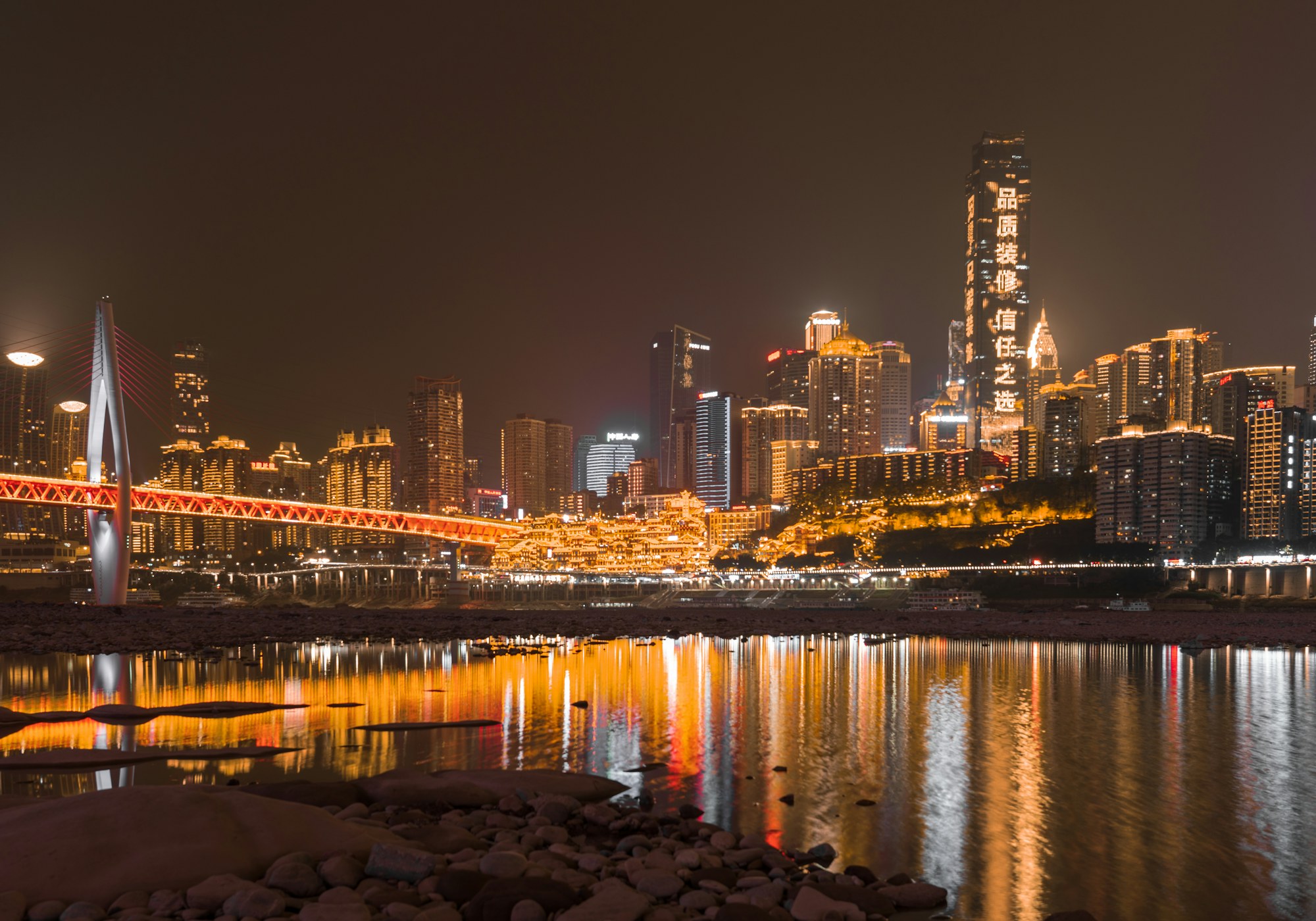
Chongqing is the China that breaks people’s mental map of China. A megacity of over 30 million built on steep hills where two great rivers meet, where the ground floor of your building might be the 22nd floor of the one below, where a monorail sails through an apartment block and the whole city lights up like a circuit board after dark. It’s also a gateway: Wulong’s karst gorges, the Dazu carvings, and high-speed trains to Chengdu and Zhangjiajie all start here. This guide covers what to see, how long to stay, and how the pieces fit together.
On this page 6 topics
The sights that earn their place
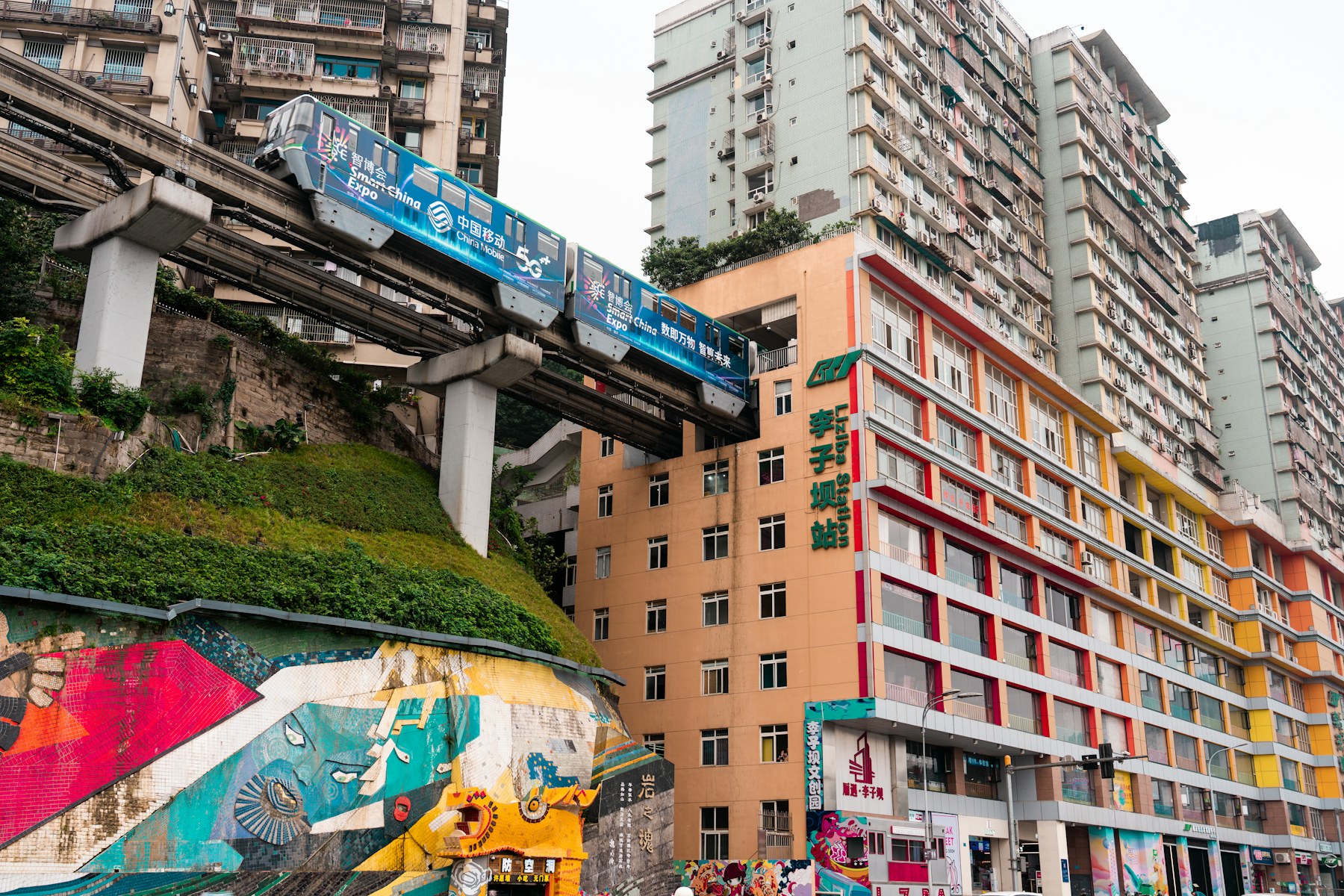
Liziba monorail station. The postcard shot — a train gliding through a residential building — takes ten minutes to see and genuinely never gets old. Go in the morning before the viewing platform crowds build.
Hongyadong and the night view. A cliff-hugging stack of stilt houses and restaurants above the Jialing River. Touristy? Absolutely. Still worth it at dusk, when the lights come on and the skyline across both rivers answers back. Chongqing's night view — especially from the south bank around Longmenhao — rivals any in Asia.
Yangtze Cableway. The city's old commuter gondola across the Yangtze, still the best four minutes in town: working transport turned beloved icon.
Ciqikou Old Town. A Ming-dynasty porcelain port turned lane market — go early, graze on the snacks (the fried dough twists are the local souvenir), and leave before the midday crowds.
Eling No. 2 Factory (Er Factory). A 1950s printing works reborn as creative studios and cafés on a hilltop — the young Chongqing answer to an industrial past, with skyline views thrown in.
Three Gorges Museum. The serious half-day: the history of the rivers, the dam-era relocations, and Bayu culture, with the People's Great Hall facing it across the square. Air-conditioned, well curated, and free to enter (bring your passport).
An old teahouse. Tucked under the modern city are traditional teahouses where Chongqing slows down over jasmine tea — the locals' pace, and the perfect counterweight to the skyline. We build one into our city days.
Hotpot, properly. Chongqing is a birthplace of hotpot and takes it personally. The real experience is a neighbourhood restaurant, a bubbling split pot, and a guide who orders like a local — this is dinner theatre, not a set menu.
How many days do you need in Chongqing?
- 1 day covers the headline city sights at a brisk pace — most visitors' mistake is stopping here.
- 2 days is the sweet spot for the city itself: one day for the river-and-old-town line, one slower day for Ciqikou, the museum and a teahouse.
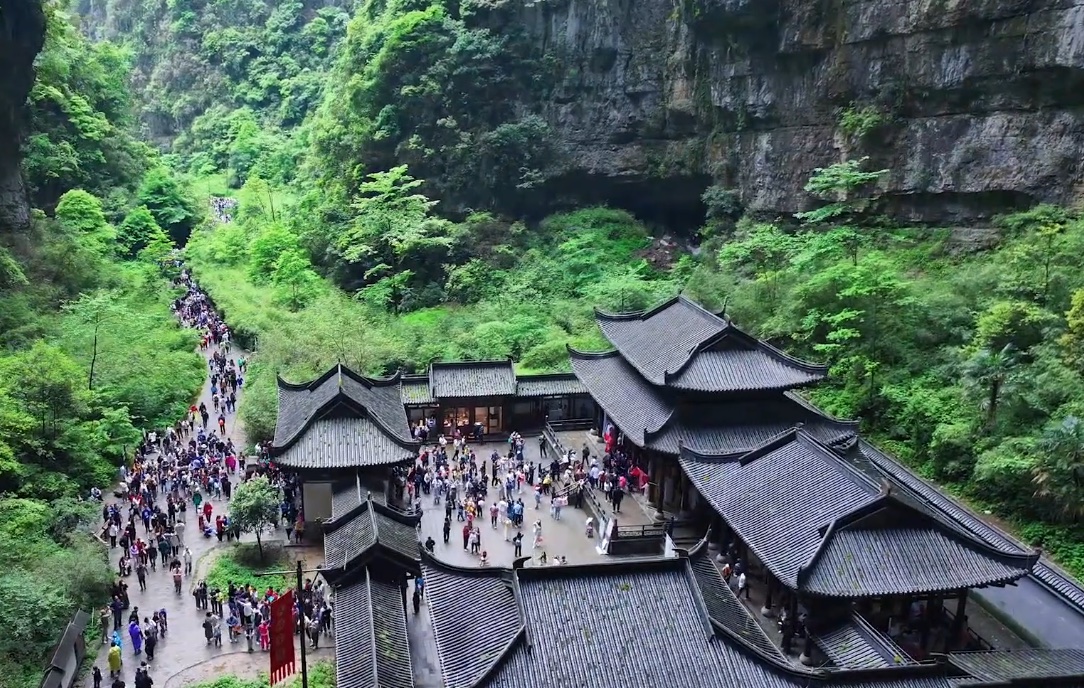
- 4–5 days turns Chongqing into a base: add a day trip to Wulong Karst (the Three Natural Bridges and the Longshuixia fissure gorge) and a day at the Dazu Rock Carvings, and you have one of the great short trips in China.
Our 5-day Chongqing trip is built exactly on that rhythm.
Where to go next (all by high-speed rail)
Chongqing’s central location makes it the premier railway crossroads of southwestern China. Clean, prompt high-speed connections link the city to world-renowned natural wonders and historic capitals:
| Destination | Travel Time | Rail Service | Highlights & Experience | Curated Tour |
|---|---|---|---|---|
| Chengdu | About 1–1.5 hours | Frequent CRH High-Speed Train | Giant pandas, leafy teahouse culture, Sichuan gastronomy, and ancient Sanxingdui bronzes nearby. | Chongqing + Chengdu (7 days) → |
| Zhangjiajie | About 2 hours | Direct High-Speed Rail (opened 2025) | The soaring Avatar sandstone pillars, Tianmen Mountain skywalk, and Tujia ethnic heritage. | Chongqing + Zhangjiajie (7 days) → |
| Shanghai | Overnight sleeper | D-train Soft-Sleeper Express | Sleep comfortably on the train and wake up on the Bund: saves a hotel night and daylight travel hours. | Chongqing–Chengdu–Shanghai (10 days) → |
Practical notes
- Getting around: Hills make Chongqing a poor walking-only city despite the distances looking short on a map — a private car earns its keep here. The metro is excellent and an experience in itself (some stations are 30+ storeys deep in escalators).
- When to come: Spring (March–May) and autumn (late September–November) are kindest. Summer is hot, humid and proud of it; winter is misty and atmospheric, and when the famous photographs of towers in fog happen.
- The drone light show: On scheduled evenings (typically weekends and holidays), choreographed drone shows light up the riverfront — dates vary, so we check the current schedule when planning your trip rather than promise it.
- Arriving: Chongqing Jiangbei Airport connects to Australian cities via major hubs; most of our trips start with a meet-and-greet pickup, so the mountain-city navigation starts on day two, not at midnight on day one.
Frequently asked questions
Is Chongqing worth visiting, or just a stopover?
Two years ago most Australians couldn't have placed it on a map; the city has since become one of China's most talked-about destinations precisely because it isn't polished for tourists. With Wulong and Dazu as day trips, it anchors a 5-day trip by itself — and pairs with Chengdu better than any two cities in China.
Is Chongqing very spicy?
The food can be — mala (numbing-spicy) is the local signature — but every kitchen cooks to order and non-spicy Chongqing (clear-broth hotpot, noodles, river fish) is excellent. Your guide's job includes calibrating this daily.
How does Chongqing compare with Chengdu?
Chongqing is vertical, intense and river-built; Chengdu is flat, leafy and famously slow. They're 300km and a world apart, an hour by train — which is exactly why the pairing works.
Editorial Integrity & Verification: Researched and published by China Journey Co. (ABN 66 703 178 509). Chongqing is where our western China operations begin and where our local guiding team lives. Information, high-speed rail connections, and travel logistics independently verified and checked on .